Why are LED corn light bulbs shaped like that? The answer begins with the light they replace. Traditional bulbs send light in many directions, while many LEDs shine mainly from their flat surfaces. A corn bulb uses rows of small LED chips around a central body, creating a wider spread of light. It resembles an ear of corn for a reason. More chip surfaces face outward, helping illuminate a garage, workshop, or high-ceiling room.
The shape also leaves space for air to move around the bulb. That matters because heat can shorten an LED’s working life. James Brodrick, former manager of the U.S. Department of Energy’s Solid-State Lighting program, has emphasized the importance of managing heat in LED products. In plain terms, LEDs need a path for heat to escape. That sentence is a paraphrase, not a verified direct quotation. It is worth being precise.
In this guide, five practical tips will help explain corn bulbs’ design, fit, brightness, and limitations. Check the fixture opening and socket before buying; some corn bulbs are surprisingly large. Compare the bulb’s light output and beam spread, too. A higher wattage rating alone does not guarantee better room lighting. Small details matter. And the shape is not a promise of perfect performance: enclosed fixtures, poor ventilation, or an unsuitable application can still cause problems. That is one detail buyers may overlook.
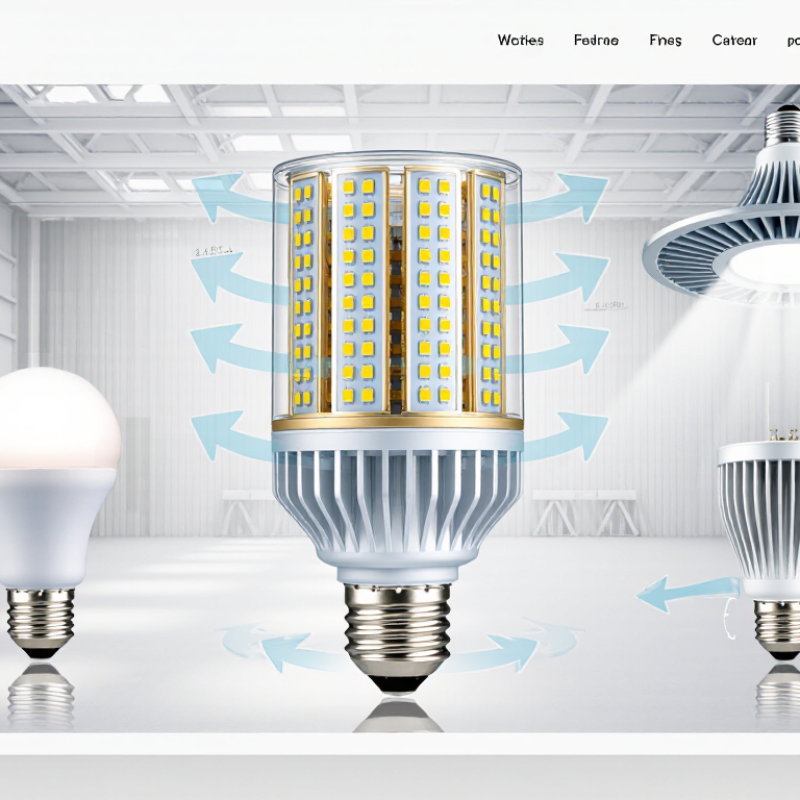
An LED corn bulb resembles a small lantern because its light sources sit around a central body, not just at the tip. Many models arrange compact LED boards along several sides. This spreads light around the bulb and helps mimic the broad glow of older lamps. The shape also leaves room for a heat-conducting core and open surfaces that release warmth. It is practical, though not especially elegant.
The U.S. Department of Energy’s 2020 U.S. Lighting Market Characterization found that LEDs made up nearly half of installed U.S. lighting stock. Their widespread use reflects efficiency, but the bulb’s shape solves a different problem: LEDs naturally direct light, so side-mounted arrays help distribute it across a room. The fins or exposed metal can aid heat transfer, too. Still, more surface area does not guarantee even lighting; placement and fixture design matter.
Tips: Check the bulb’s listed beam angle and dimensions before buying. A corn bulb may not fit enclosed fixtures, and its exposed LEDs can create bright spots. The DOE’s LED guidance notes that LEDs use at least 75% less energy than incandescent bulbs. That is useful context, but shape alone cannot promise comfort or performance.
A corn bulb’s shape is functional: rows of small LED chips sit on several faces around a narrow central stem. Instead of sending most light from one flat surface, this layout aims light sideways and upward as well as forward. That geometry matters. In a bare ceiling socket, it can brighten nearby walls, shelves, and the floor more evenly than a single-sided panel. The result depends on the fixture, though. A deep shade can still block those side-facing chips, and close chip spacing may create uneven patches.
The U.S. Department of Energy’s Energy Saver guidance says LEDs use at least 75% less energy and can last up to 25 times longer than incandescent bulbs. Those figures describe LED technology, not a guarantee that every corn bulb spreads light well. For distribution, check a photometric report based on IES LM-79 testing; it measures light output and intensity across angles. Look for a broad distribution curve, not just a high lumen number. In a small workshop, I would also check the bulb from several positions. Some multi-sided designs leave faint shadows between their light zones. I find that easy to miss in a product photo.
Look closely at a corn-style LED bulb, and you will see narrow boards arranged around a central stem. The gaps between them are deliberate, not merely decorative. They leave room for air to move around the LED surfaces. Warm air can rise through the open channels while cooler air enters below. This natural convection helps carry heat away from the LEDs and internal components. No fan is needed. Heat still matters. LED chips and their driver electronics produce heat, even when the bulb feels cooler than an incandescent lamp.
The open shape helps, but it cannot overcome every installation problem. A sealed glass fixture, a tight shade, or a bulb installed base-up may limit airflow. Check the bulb’s fixture guidance, and leave space around its body when possible. Dust can also collect between the boards, so a crowded-looking bulb may need gentle cleaning after it is switched off and cool. I used to think more exposed surfaces always meant better cooling. That is too simple: board layout, materials, and driver design matter too. The gaps are useful, but they are only one part of heat management.
LED corn bulbs use a tall, cylindrical shape with rows of light-emitting diodes around the sides. This design sends light in several directions, which can suit open fixtures that need broad coverage. But the same shape can create fit problems. A bulb may screw into the socket yet touch a glass shade, reflector, or fixture frame. Check the bulb’s full length and widest diameter against the available space, not just the socket size. Also check whether the fixture allows enough airflow; some enclosed fixtures can trap heat and shorten an LED bulb’s life.
Tips: Measure the opening and the space above the socket. Compare those figures with the bulb’s listed dimensions. Look for obstructions around the sides, too. A narrow reflector may block the bulb’s outward-facing LEDs. Check the fixture instructions for enclosed-fixture limits and dimmer compatibility. Small details matter.
A practical test is to switch off power, let the old bulb cool, and compare its shape with the replacement before installation. Don’t force a bulb past a shade or cover; a snug fit is not always a safe fit. I sometimes focus too much on brightness and overlook clearance. That is an easy mistake. If the bulb sits crooked, presses against glass, or leaves little room for ventilation, choose a smaller shape or a fixture-approved alternative.
| Tip | Shape or feature | Why it matters | Fixture compatibility check |
|---|---|---|---|
| 1. Check the bulb’s overall length and diameter | The tall, wide body carries multiple LED panels around a central core. | Corn bulbs can be larger than ordinary household bulbs, and their dimensions vary by model. | Measure the fixture opening and available space, including any shade, reflector, or protective cover. Compare those measurements with the bulb’s listed dimensions. |
| 2. Match the base to the socket | Corn bulbs are sold with different screw bases, including medium and larger bases. | A bulb that fits the space still will not work if its base does not match the socket. | Read the fixture label or identify the socket before buying. Base types and naming conventions can differ by region; do not assume an adapter will be safe or suitable. |
| 3. Consider the light direction | LED chips are arranged around the bulb, often producing light in several directions rather than only from the tip. | This layout can spread light around an area, but a deep reflector or narrow housing may block some of it. | Check whether the fixture needs sideways light, downward light, or a focused beam. A corn bulb is not automatically a suitable replacement for a directional lamp. |
| 4. Check heat and enclosure requirements | The extended body exposes LED components and may rely on airflow to manage heat. | An enclosed or poorly ventilated fixture can trap heat. Whether a particular bulb is suitable depends on its design and stated rating. | Use it in an enclosed fixture only when the bulb is explicitly rated for that use. Follow the manufacturer’s installation and operating instructions. |
| 5. Verify orientation and fixture controls | Some corn bulbs have an orientation-sensitive design or particular clearance needs. | Installation position, surrounding surfaces, and controls can affect operation and light distribution. | Check the bulb’s permitted operating position and compatibility with dimmers, sensors, or other controls. Use only combinations specifically listed as compatible. |
Before choosing a corn bulb, check the socket, fixture, and available space. Many use an E26 or E27 base, but the bulb’s wide body may not fit a narrow shade. Measure the opening and compare it with the bulb dimensions. Also confirm that the fixture allows the bulb’s heat to escape. A sealed enclosure can shorten its life, even when the bulb fits.
Tip: Compare lumens, not watts. Lumens indicate visible light; wattage shows power use. The U.S. Department of Energy’s Energy Saver guidance says LEDs use at least 75% less energy and can last up to 25 times longer than incandescent bulbs. That is a broad comparison, not a guarantee for every product. Check the rated lifespan and warranty details.
Tip: Match color temperature and direction to the task. A 2700K bulb gives a warmer appearance; 4000K looks cooler and more neutral. Corn bulbs often spread light across many small LED chips, but the fixture still affects the result. Check dimmer compatibility and any damp-location rating before buying. Measure twice. Labels can be easy to misread. I still find that a quick fit check prevents the most annoying mistake.
Small LED boards sit around a central body. This spreads light sideways and upward, rather than only forward. Practical, not elegant.
They can brighten nearby walls, shelves, and floors in an open socket. A deep shade may block side-facing LEDs, though. Fixture design matters.
Check the bulb’s length, width, and socket base, such as E26 or E27. Measure the fixture opening, too. Measure twice.
Check the bulb’s instructions and the fixture’s ventilation. Trapped heat can shorten the bulb’s life, even if it fits.
Compare lumens for visible light and watts for power use. A high lumen number alone does not show how evenly light spreads.
They describe color temperature. Around 2700K looks warmer, while 4000K appears cooler and more neutral.
Look for a photometric report based on IES LM-79 testing. Check the distribution curve, not just the lumen rating. Product photos can hide shadows.
No. General LED comparisons cite at least 75% less energy use and up to 25 times longer life than incandescent bulbs. Individual results vary; check the rated lifespan and warranty. I still find labels easy to misread.
LED corn bulbs are shaped to resemble an ear of corn, with many small LED chips arranged across several sides of a central body. This multi-sided layout lets light spread in more directions than a single flat panel, helping illuminate a room more evenly. The open spaces between the LED-covered surfaces also allow air to circulate, which can help manage heat and support reliable operation.
When considering why are led corn light bulbs shaped like that, their design also reflects practical installation needs. The elongated form may fit certain fixtures well, but it can be too large for others, especially enclosed or narrow housings. Before choosing a corn bulb, check its dimensions, base type, brightness, color temperature, and whether the fixture allows enough space and ventilation. These details help ensure the bulb suits both the lighting task and the fixture.
